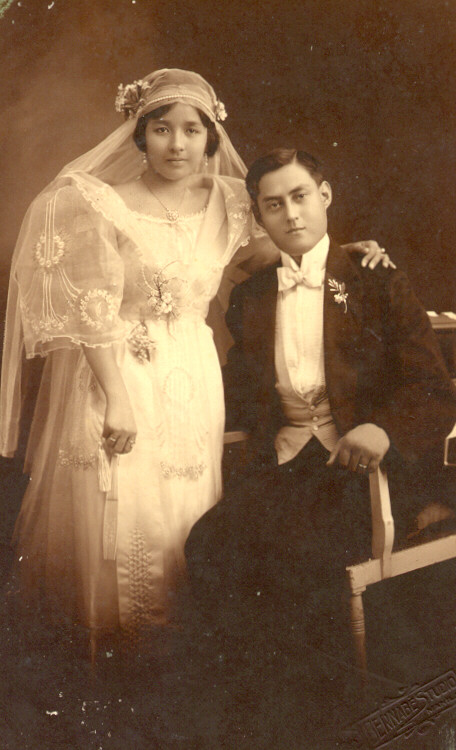
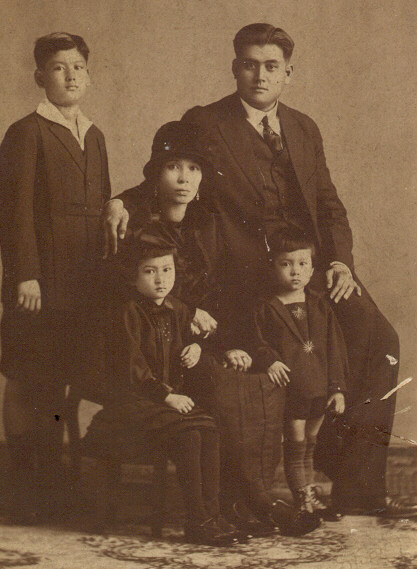
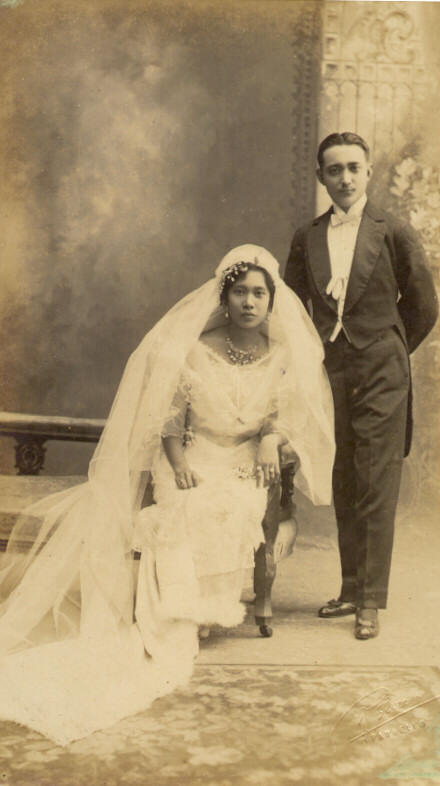
———- a poem by her loving sister, Benjamina

Ang disciplinarian na ina, lola, at maestra but super bait at sweet na sister kita, colleague, o tulska
Wansapanatym, may isang bata, ang pangalan ay Carmela, kahulugan ay kay bongga!
Bunso ni Paquito at Pacita sa anak na labing isa. Carmel sa wikang Hebrew ang ibig sabihin ay hardin o
ubasan ng Diyos na dapat pagyamanin at palaguin. Kaya naman kay daming magagandang anak at apo
na naging yaman hindi lang dahil kay Ong kung hindi mga mag-aaral ng MSU na nangangailangan.
Tulad ng ama namin na di kayamanan, aba’y ang daming Bulungang eskewala e sariling mga anak ay kay
pureza noong nagsisimulang magtaguyod ng pamilya. Kakapusan ay parang di alintana sa paniniwalang
may Diyos na kakalinga na dumadating nga naman mula sa kung saan saan tulad ni Estela at Rudyard
Lozada, kasama na si Camille at Gracia, Paz at Pol Durico, Glenn na eldest at favorite na pamangkin o
Kenjave na laging nasa ubasan ulan ma’y di magdaan. Sympre si Benjamina, na laging partner pag may
expense beyond her, lagi kasing nagboboluntaryo alagaan si ganito, alagaan si ganiyan kahit sariling
buhay ay kalbaryo, at ang kanyang kuya sandz as mentor na always ready para kay mentee.
Ayaw niyang mag dean sa totoo lang subalit nadala sa udyok nina Sandy at Benjie na tumulong upang
programa ay gumanda pa. Alam nang lahat na hindi naging madali ang buhay ng super womang si
Carmela na all smiles tuwina di halata na kaydaming dinadalang problema buti na lang may dugong
Kasatila, matibay ang loob na kayang harapin anuman ang makarating sa damdamin.
Kaya naman limang anak na babae ay puro Titulado lahat produkto ng sariling pawis, tiyaga, at
determinasyong tumayo sa sariling paa at kusa. Salamat sa MSU siguradong mamimiss niya kayo. Sa
katunayan ayaw niyang pakinggan ang AVP na pinadala ni Doc Norman na unang nota pa lang ay paiyak
na ang Melang.
Madaling pakiusapan o hingan ng tulong ito man ay pang akademiko o domestiko maging sa pagluluto ay
handang magturo kahit via zoom empanadang recipe ay boom na boom. Yun lang limot ko na.
Magpahouse sit ay de nada kahit pa sya ang pumuno ng refrihadora. Noong hinagupit ni kristine ang
Luzon, gusto pang pumunta ng Los Baños upang tumulong dahil baha sa loob ng bahay naming ay
walang humpay.
Pagdating ng Enero bayad na ang amelyar ko basta lang reimbursement ay sobra dito. Subalit ayaw
maghugas ng plato kaya ang lusot ay pagpapiano. Minsan habang nagpapiano, narinig na tinatawag ng
Papa na kung tawagin ay Came. Nang marinig ang meeeh, meeh, dali daling tinapos ang pagpapiano at
dagling lumabas baka mapalo. Ang ama nama’y may sa hudio, sinturong mahaba, paglumapat pihado
dila lang ang walang lapat. Paglabas, ng pinto, bumungad ang tumatawag, meeeh, yun pala kambing na
alaga ni Mamang Veling. Ang paboritong tugtugin sa piano ay Fur elise na sinasabayan ng pilyo naming
kuya na si Beloy sa liriko na: “Ting-aling, aling naghihintay, ang plato mo naninigas,” na mauuwi sa tawa
sa pang-aalaska ng pilyong kuya.
Kahit bumiyahe ng apat-naput at dalawang kilometro mula kay Estela sa Alabang sakay ng bus may
dalang panga, sashimi, at pampano makita lang ang sisterakang nakatira sa bundok ni Maria. Tinipon
kaming tatlo noong Disyembre, kasama si Laura na taga Pampanga. Hindi pumayag na walang picture
ang triolos pangits na kung tawagin ng Papa, yun pala ay huling mahjong na may tongits 101 pa.
Tunay ngang kahanga-hanga ang naging buhay ni Melang na kahit shuldetz (suplada) ay may dahilan at
kung kinakailangan. Mga anak ay bugbog sarado, masakit man sa loob, may vicks na katapat ito. Marahil
ay mana sa aming ama, na sa lakas ng boses at laki ng mata, siguradong tiklop ka na.
Subalit, sa likod ng masungit na anyo, nakatago ang malambot na puso na nagpapatunay kung ano ang
totoong pakay. Kaya naman mga anak ay hindi umaalma bagkus pinapakiramdaman lang ang awra
pagdating ng ina dahil alam nila kung ano ang hirap ng maging isang single parent na puro girls pa ang
rarampa este may isa pala na ex gurl na.
Naikwento sa akin na sa pamantasan ay mahal sya ng mga kasama kahit pa nga minsan ang taray ni
ma’am Carmela. Noong nagraduation aniya mga batang pasuway ay inalis sa linya. Ganunpaman, mga
mag-aaral takot man ay may respeto dahil alam nila sa ikabubuti ang pakay nito. Ika nga galit with a
purpose.
Sa iyong bagong paglalakbay, alam ko may bago kang magandang puting kotse animo’y bridal car
papunta kay San Pedro waiting from afar. Wag mag atubili kung ikaw ay mabore dyan nandito kami
upang mapansin na ikaw ay nasa aming tabi. Kung ganyan ang itsura na parang si sleeping beauty,
gorabels, magselfie ay kering-keri.
Melang, thank you for the love and the courage you have shared, you will always be remembered for
you have proven to me as I’ve requested that you will visit me to prove that life does not end here but
continues to linger. Parang K-drama, heavenly ever after. True enough you have proven this not once but
thrice! To you Melang, may you have a new beginning in the vineyard of God, which you have
accomplished in many ways, many roles only you can play. Paalam, Melang, labyu ang lagi mong sinasabi
tuwing nagchachat tayo. Sana may internet kayo diyan para mag maritesan tayo. Happy birthday,
Melang!
================================
Born July 15, 1963, Carmela Gonzalez Ong earned a Bachelor of Secondary Education major in Filipino from the Philippine Women’s University. She obtained a Master of Arts in Education major in Reading from Mindanao State University–General Santos City. She successfully completed her PhD in Filipino at the Mindanao State University–Iligan Institute of Technology. For more than three decades, she served as a professor of Filipino Language and Literature at the College of Social Sciences and Humanities of MSU–GSC. She was an active advocate of indigenous literature and society, contributing to National Commission for Culture and the Arts folklore research, particularly on the indigenous Tboli group. She was an active member of organizations and movements dedicated to sharing knowledge with indigenous peoples to enhance their literacy levels, through which the extension program “IPagtuturo – Literacy Outreach Program for IPs” gained recognition and awards. She served as Dean of the College of Social Sciences and Humanities at Mindanao State University–General Santos from 2021 to 2024. She died on July 9, 2025.

How apt that I am coming out with the THIRD edition of the Doble Zeta Family Tree on All Soul’s Day! It is really being one with them on this day.

The Family Tree is the Bible of one’s existence. Here you find one’s origins — where you came from. The Doble Zeta is so lucky to have a Family Tree so carefully put together over the years by family members.

I came across a notebook belonging to my grandfather, Fernando Gonzalez, the eldest son of Dr. Joaquin Gonzalez, son of Friar Fausto and Maria Amparo Gonzalez. In his careful and defined handwriting, he had put names, births, baptismal dates, who were the godparents, deaths and causes of deaths, of each member of the family.  Fernando died in 1938.  After his death, another handwriting took over the chronicling of the same statistics.

I grew up in a house full of women. I saw my aunt, Georgina, meticulously type data not only for the Joaquin Gonzalez family, but also for the other children of Friar Lopez. If she came across information related to it, she would also add it to her notes. These, and other notes made by similarly-interested family members, found their way to the First Edition of the Doble Zeta Family Tree.  The committee members purged wrong information, added new ones, and laughed at the accompanying stories of these people they were putting on paper. The Committee members were Lita Estrada (Jose), Renan Prado, Elsa Alicante and Eva Iral (Soledad), Phinny Ordonez (Francisco), and for the big Joaquin group — Nena Franco, Naty Palanca, Roro Gonzalez, Tina Lesaca, Dada Aragon, and Nina Noblejas.  They presented the Family Tree Book to the Family Reunion held in the dela Salle auditorium where over a hundred excited Doble Zetans congregated for the first time. If I am not mistaken, this took place in 1978.

Twenty years later, I decided to update the 1978 Family Tree book, and put photos of the family members.  One of my favorite memories is of one aunt, who came several times to my office to give her fourth photo to be placed on the tree. She also made sure her branch of the family had the right information. Another aunt collected 1 x 1 ID photos from her relatives from far-away Baliuag to be posted.  I still have those photos.

Now, it is again twenty years, time to shake the skeletons once again.  I am quite excited about this new book. I discovered this father-and-son curators of family tree websites, and contacted them. It will be more scholarly.  They will trace the lines depicting the flow of one generation to the next.  There will be a directory where one can look up a name and find it in the tree more easily.

Another plus is that this book will be able to go back to Valladolid, Spain, where Friar Fausto Palominas Lopez was born.  The Spanish records are so good, this book will have eleven generations of Friar Lopez’s family.

For our Mariquita Gonzalez, whom I imagine to be a strong willed woman, this book will have three generations of her lineage.

Mariquita’s parents, the Venancio delos Angeles family, will have also a few generations listed in the book.

A few years back, the Spanish government alledgly issued a decree stating that those who could prove they have Spanish roots can move to Spain as immigrants.  One uncle came to me and asked, “Can I have this book to show the Spanish Embassy that I am a Spaniard?”  The thought of being an EU citizen travelling without visa around the world is pretty exciting.

This book will not end on November 2, 2019. We have to check it and continually update it. There will be many issues that will need to be addressed, the foremost of which is privacy.  Some individuals will want to have their secrets kept secret. But, in general, I think having the Family Tree Book 2019 will be essential to one’s identity. Who am I?


WHAT BEING A “DOBLE ZETA” MEANS TO ME

If you reside in San Francisco, living your own life, what is the benefit of knowing you are a “Doble Zeta”?

If you live in Baliuag, and know that, somehow, you are related to the personage that the main street is named after, Dr. Joaquin Gonzalez? Does it help your life?

If you find out that these celebrities—Vicky Belo, Ryan Agoncillo, and Gene Gonzalez—they are related to you, what does that mean to you?

If you are a student of La Salle University, and find out that the newest building is named after Brother Andrew Gonzalez, and you are related to him—does your heart swell with pride?

It’s been 202 years since Friar Fausto Lopez, the ancestor of the Gonzalez Doble Zeta, was born in Valladolid, Spain.  He travelled to the Philippines when he was 18 years old, fresh from the seminary. He was assigned to Cebu initially, then to Plaridel, Bulacan.  When he was 34, he was reassigned to Bulacan, this time to Baliuag. There he met his match,  the beauteous Mariquita Gonzalez.  She came from a wealthy and landed family. She was strong-willed, intelligent and considered unconventional for her time. Their romantic liaison produced six children—Soledad, Jose, Joaquin, Carmen, Rita and Francisco.  Since Mariquita and Friar Lopez were not married, the children took the name of their mother, “Gonzalez”.  The “Doble Zeta” is because Gonzalez is spelled with two “z’s” , or “doble zeta” in Spanish.

Dr. Joaquin Gonzalez became well-known in Baliuag, Bulacan because he represented Bulacan in the 1835  Constitutional Convention. The marker in Baliuag says that, “after Mariano Ponce, Dr. Joaquin Gonzalez is the next favorite son of Baliuag.”

Dr. Joaquin Gonzalez moved to the next town Apalit, Pampanga  when he married Florencia Sioco, the daughter of a wealthy businessman.  They had ten sons who gave them 82  grandchildren.

Table 1. FOUR GENERATIONS OF THE GONZALEZ DOBLE ZETAS

Total

First Generation Friar Fausto Lopez

1

Second Generation

Soledad

Jose

Joaquin

Carmen

Rita

Francisco

6

Soledad

Jose

Joaquin

Carmen

Rita

Francisco

Third Generation

6

6

10

0

0

11

33

Fourth Generation

24

18

82

0

0

22

146

Alive from 4th Gen

1

2

20

0

0

5

28

My mother, Eglantine, was the third eldest child among the Fourth Generation of the Gonzalez clan.   She would have turned 100 years old this 2013.  The eldest among the Fourth Generation children was Rogerio Gonzalez, son of Augusto Gonzalez.  The second eldest among the Fourth Generation was Eglantine’s brother, Amaury Gonzalez. Eglantine and Amaury were children of Dr. Joaquin Gonzalez’ eldest child, Dr. Fernando Gonzalez.

It was my mother who drummed into my mind the importance of being a Gonzalez.  She often said that the Gonzalez had “the bluest blood running in their veins.”  Even if it probably meant “the royalty” among the people of Baliuag and Apalit,  in my innocent mind, it  felt like royalty among the people of the whole Philippines, nay, even of the whole world.

My mother also told me to be proud of being a Gonzalez. It wasn’t too hard, since Brother Andrew Gonzalez’ block-long ancestral house was close to ours. It’s like saying, “We’re rich, too!” Brother Andrew was the son of Augusto “Bosio” Gonzalez, the millionaire brother of my mother’s father.  When Augusto made his first million pesos, he built and donated the Municipal Hall of Apalit, Pampanga. He named it after his mother, Florencia Sioco Gonzalez. My mother didn’t say it, but I could tell that her uncle Lolo Bosio was her idol.  She wanted to be rich like him one day.

When I was preparing to study at the University of the Philippines, my mother proudly pointed out to me that  her Uncle, Bienvenido “Bindo” Gonzalez, the brother of her father, was  the Sixth President of the University of the Philippines.  Lolo Bindo moved the University of the Philippines from Manila to Diliman, Quezon City, just before the war broke out.  He was a highly principled man who refused to give a Doctorate Honoris Causa at the UP  to someone he considered a “rebel”, and therefore unworthy of the honor,  — the then president of Indonesia, President Sukarno.  If I remember right, Lolo Bindo was almost replaced from his job for this action.  But he had the support of the students, who shared his strong sense of “honor”.  They put up banners and staged rallies.  He was reinstated shortly after.

My mother also spoke tenderly of another brother of her father, Pampanga Representative Fausto Gonzalez, who was not only handsome and charismatic; he was also popular as a politician. I used the adverb “tenderly” with regard to Lolo Fausto, because he was so good-looking, he had women fighting over him.

Well, it wasn’t hard to look for Heroes among my mother’s TEN uncles.  They were so many to choose from. Then, my mother had 82 first cousins, many of them brilliant and successful as their parents.  From  her grandfather’s siblings, she had a total of 146 cousins.

Now the baton has passed on to me. My son doesn’t share my mother’s views. He says, “What is so great about coming from an illicit relationship with a priest who broke his vows?”

I have to ask your opinion.

BROTHER ANDREW GONZALEZ[1]

(1940 – 2003)


“Rarely does one find a person who combines remarkable intellect and practicality.  Much more extraordinary is when the same person combines these attributes with the gift of visionary leadership.  As if these traits were not enough, a person who has also been endowed by the Almighty with unquestionable integrity and an unfaltering commitment to serve others definitely shines like a gem.”

 –          In reference to Bro. Andrew, Manila Bulletin, 01 February 2006.

Brother Andrew was born in Manila on February 29, 1940, and was given the name Macario at baptism.  He is descended from a family that has been involved in education for three generations.  His grandfather, Joaquin Gonzalez, of Baliuag, Bulacan, was a member of the Malolos Constitutional Assembly and was the founding Rector of the Universidad Literaria de Filipinas under the Aguinaldo Government.  Joaquin’s son, Bienvenido Ma. Gonzalez, was Dean of the Agricultural College at Los Baños when he was named President of the University of the Philippines, from 1939 to 1943, and then from 1945 to 1951. It was under his administration that the University of the Philippines moved to its present Diliman campus.  Gonzalo W. Gonzalez served as Regent of the University of the Philippines and Professorial Lecturer at its College of Law, and Eva Beatriz Gonzalez was Dean of the College of Home Economics; both were children of Bienvenido.  Andrew Gonzalez is the nephew of Bienvenido Ma. Gonzalez, the son of Bienvenido’s older brother, Augusto Gonzalez y Sioco, and Rosario Arnedo, the daughter of Macario Arnedo, the first elected Governor of the Province of Pampanga during the first decade of the American regime, from 1902 to 1911, and in acting capacity, 1919.

Macario Gonzalez entered De La Salle College in Manila in 1946, thus beginning a lifelong association with the De La Salle Brothers.  He was a brilliant pupil and his classmates in grade school remember him being accelerated and collapsing two grades in one year (prep and Grade 1, Grade 2 and 3) and completing elementary and high school in nine years and graduating as salutatorian.

While in high school, he realized that he had a vocation for teaching and that he could make his best contribution as a Christian educator by being a Brother of the Christian Schools.  He did his postulancy and novitiate in Baguio in 1955 and received the Brothers’ habit on November 20, 1955. He made his first vows on November 21, 1956, and entered the scholasticate of the Brothers in Winona, Minnesota, on December 10, 1956.

He attended college at St. Mary’s College in Winona, Minnesota, one of the tertiary institutions run by the La Salle Brothers in the U.S., and obtained his Bachelor of Arts, summa cum laude, in 1959, when he was only 19 years old. Just one year after obtaining his B.A. he graduated, at age 20, with a Master of Arts in English Literature from the Catholic University of America in Washington, D.C., writing his thesis on D.H. Lawrence’s The Woman Who Rode Away.

 He returned to the Philippines in 1960 to teach English language and literature at the high school department of La Salle College (now University of Saint La Salle) in Bacolod, Negros Occidental.  He served in various mid-level administrative positions at De La Salle College in Manila from 1964 to 1967: Coordinator of the English Language Arts Department in the elementary school, Chair of the Letters Department, Dean of Student Affairs, Director of Admissions.  He made his final vows as a De La Salle Brother on May 30, 1965.

When he was assigned to Manila in 1964, he developed an interest in linguistics as a way of improving the teaching of languages in the Philippines and enrolled for graduate courses in linguistics at the Philippine Normal College as well as the Ateneo de Manila University.  In 1967, he entered the doctoral program in linguistics at the University of California at Berkeley as a Regents’ Fellow in Linguistics and as a Stanley Tasheira Scholar, finishing his degree in 1970.  For his dissertation, he wrote a generative semantic description of Kapampangan (his native language). While waiting to defend his dissertation, he attended a summer seminar on University Management and Organization at the University of Wisconsin at Madison in 1970.

Back again in the Philippines, Br. Andrew was Chair of the Humanities Department of De La Salle College, Manila, in 1971, and he then became Academic Vice-President of De La Salle University from 1971 to 1978. In 1978, he garnered first place among 100,000 examinees in the first Philippine Board Examinations for Teachers, scoring 86.12%. He was Acting President of the University in 1978 and President for four terms from 1979 to 1991. In 1980, as a grantee of the Philippine-American Educational Foundation, he attended the Management Development Program for College Administrators jointly organized by the Harvard School of Education and the Harvard School of Business. As part of his renewal as a De La Salle Brother, he attended Special Studies in Spirituality and Education at the Centro International Lasalliano in Rome, Italy, in 1982.

After his first stint as President of De La Salle University, he became President of the Manila Bulletin Publishing Corporation from 1991 to 1994. He was elected President of De La Salle University once more in 1994 and he held that position until 1998.  He was appointed Secretary of Education, Culture and Sports of the Republic of the Philippines in July 1998 and served in that capacity until January 2001. Returning to De La Salle University, he was appointed Vice-President for Academics and Research (2001-2003) and Presidential Adviser for Academics and Research of the De La Salle University System (2003-2005). He has been serving as President of the Manila Bulletin Publishing Corporation from October 2001 to the President.

There have been two strands in Br. Andrew’s lifework:  his being a linguist and his being an educational leader.  He has been a very prolific scholar in linguistics from 1970, and his works have been wide-ranging, covering descriptive linguistics, historical linguistics, psycholinguistics, sociolinguistics (especially language planning), and applied linguistics (especially language education).  Only recently, his work on stylistic shifts in Philippine English as well as his attempts to grapple with the problem of legitimation of local features in new varieties of English in the world and his proposition that the sociolectal varieties of English in the Philippines are very much a function not so much of social class but of extent and quality of education have given rise to seminal ideas in the field, among both local and foreign scholars.

As an educational leader, Br. Andrew aggressively pursued his vision of making De La Salle University not only a center of teaching excellence but also a research university.  He actively recruited first-rate scholars and creative writers, and he obtained local and foreign scholarships and grants for them.  He built a new library and dramatically expanded its holdings.  He instituted the trimestral system primarily to attract and retain faculty by being able to match the salaries of industry.  He doubled the student population to keep pace with the growing population of the country and its need for a bigger base of well-trained engineers, computer scientists, entrepreneurs, scientists, writers, teachers, and researchers.  He promoted graduate education, instituting new master’s and doctoral degree programs and developing consortia arrangements to sustain them.  He built up the endowments of the University. He founded the College of St. Benilde as a center for innovative teaching and acquired a College of Medicine to meet the demand for trained doctors and De La Salle University-Dasmariñas to serve a sector of the rural population.

He became President again in 1994, and his mission this time around was to make the De La Salle University System a functioning multiversity that could be a viable model for other university systems in the Philippines.  For De La Salle University Manila, his dream was that it would become a world-class university well known for its teaching and research excellence.  Two modest projects established during his second stint as President have had far-reaching effects.  One is the Summer Institute of Graduate Studies, a program that enables high school and college teachers from all over the country to come to De La Salle University Manila to finish a non-thesis Master’s degree in four summers at highly subsidized rates. The other is the Pre-School established at the College of Education, which provides day care for three to five-year olds from the depressed Leveriza area and exposes them to a rich environment of language and play activities.

Br. Andrew’s stint as Education Secretary was short but crucial to the history of education in the country.  He proposed that the number of subjects in the curriculum be reduced, leading to the revised Basic Education Curriculum now used in all public schools. He instituted a corruption-free procurement process commended even by the World Ban, successfully bringing the prices of textbooks down by 54.5%. He built 22,200 new schoolrooms and ordered schools to hold double, even triple sessions to handle the growing student population.  He started the computerization of schools.  He streamlined the administration of the NEAT and NSAT and ensured that the test results would be used by DECS to improve the delivery of instruction.  He reformed the grievance procedures of the Department. He established a transparent way of choosing DECS officials.  He initiated a massive equivalency program for non-formal education.  He institutionalized pre-school education.  He started an in-service program that allowed numerous teachers to gain graduate degrees.  He started to change the language of instruction to the regional lingua franca for the first three grades.  Many of the programs implemented by later Department Secretaries have come from his imaginative but practical, and always well-informed, mind.

Bo. Andrew has been the recipient of numerous awards and distinctions:  The National Research Council of the Philippines Achievement Award (for outstanding achievement in the field of social sciences and humanities, 1981; Officer de l’Ordre des Palmes Academiques from the Government of France, 1986; Recognition from the Center for the Development of Languages in the Philippines (for supporting the use of Filipino as a national language), 1988; Outstanding Kapampangan Award (in Education) from the Province of Pampanga, 1988; Fortieth Anniversary Fulbright Award (in education) from the Philippine Fulbright Scholars Association, 1988; University Fellow, De La Salle University, 1989; Gawad Panitik award awarded by the Panitik ng Kababaihan with the Municipality of Manila and the National Press Club (for contributions in linguistics, education, and social science), 1990; St. Vincent de Paul Medal of Academic Excellence from Adamson University, 1991; Gawad Gantimpalang Quezon sa Panitikan, 1993; Member, National Academy of Science and Technology and Academician, 1986; Outstanding Manilan Award from the City of Manila, 1996; the Fourth Degree of the Order by the Knight Grand Officer of Rizal, 1998; Saint Bede Award from San Beda College, Manila, 2003; Ex Corde Ecclesiae from the International Federation of Catholic Universities, Paris, 2005. He has received honorary doctorates from Waseda University, Tokyo, Japan (1989); Soka University, Hachioji, Japan (1998); St. Paul University, Ottawa, Canada (1999); and St. Mary’s College of California, Moraga, California (2000).

As if such achievements were not enough, there is another distinction that appears unobtrusively at the end of his curriculum vitae.  His total number of publications in linguistics, education, and religious education currently stands at 2800.

Greatness often does not come from a single book, a single invention, or a single discovery.  Frequently, accomplishment is the result of hard work over a whole lifetime.  In Br. Andrew’s case, it is as if two lifetime achievements have been accomplished in one lifetime – with the achievements done seemingly effortlessly.

In granting him the title of President Emeritus, De La Salle University-Manila reaffirms the gratitude to Br. Andrew. As the title Emeritus implies, Br. Andrew has retired from actively leading the University, but he is not and will never be inactive.  He will always be called upon to share his wisdom with the University.  Truly, Br. Andrew is the man God gave the University, the country, and the world to lead and inspire us at this crucial moment in history.

[1] “Biography of Br. Andrew Gonzalez, FSC”, by Dr. Ma. Lourdes Bautista, published for the Conferment of the title President Emeritus on Br. Andrew on September 28, 2005 at the De La Salle University-Manila, Philippines.
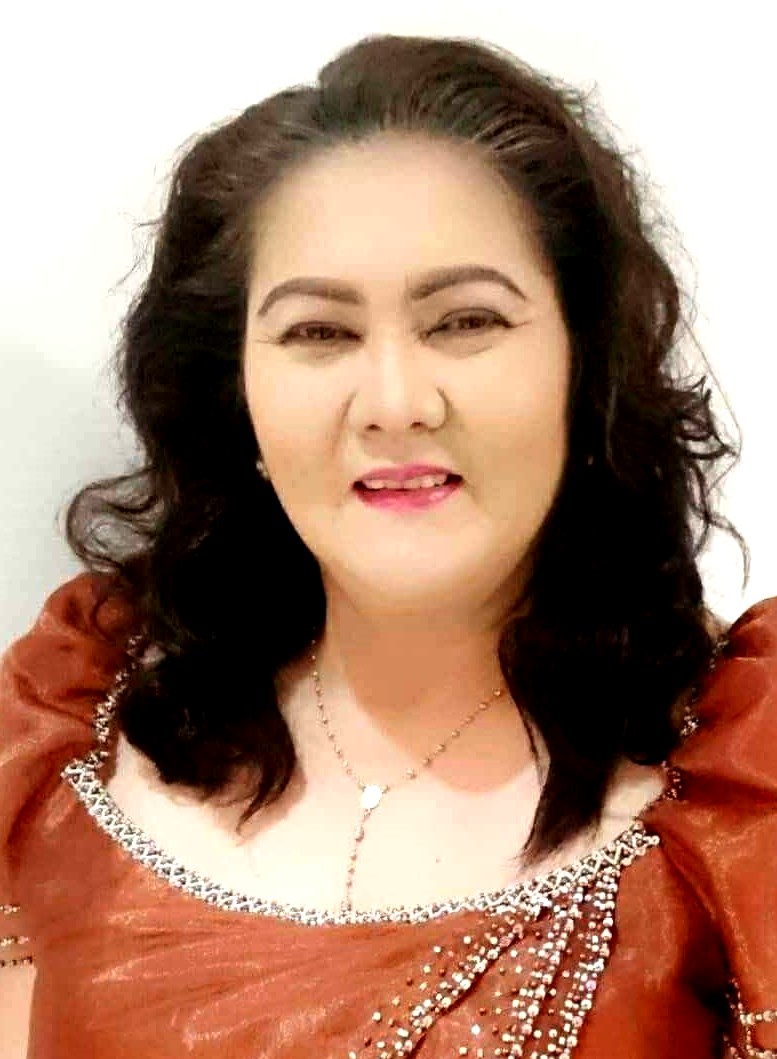
FAUSTO GONZALEZ Y SIOCO

(1897-1951)

Fausto Gonzalez was certainly the most colorful among the Gonzalez brothers. He was the youngest among the ten brothers. He and Joaquin were the “aduang bunso”—the two youngest ones. Being the youngest gives one an edge over all the others. Normally, the mother is strict with the eldest. She fights tooth and nail to instill in them her values, her dreams.  Then the “middle children” are usually the ones who are rambunctious, noisy, doing mischievous things to get attention.  But after getting worn down with resistance to discipline, a mother normally just gives in to the what the youngest  ones want.  Besides, they are usually the cutest, most lovable of the lot…… In the Gonzalez household, the three eldest ones were the most disciplined.  Fernando and Jesus became  prominent physicians, and Augusto became “the millionaire.” The middle children didn’t do so bad.  Virgilio became a wealthy businessman and doctor in Cebu, and Bienvenido became a president of the State University.  Javier died early, so he didn’t get to reach his potential.

Take a look at the picture of the seven brothers. Who catches your eye among them?  Fausto does, with his unmistakable attention-getting black-and-white shoes.  He has also crossed his legs.  You go higher, and catch the twinkle in his eye.

Joaquin may have married a vivacious, party-loving socialite, but it was Fausto who married an heiress, the daughter of a shipping magnate.  Amparo de la Rama, of the de la Rama shipping lines, no less.  Fausto  was the man of her dreams—charming, witty, debonair, and he swept her off her feet, just like in the movies.

They had a child, Fasuto Jr.,  also known as “Dodong”, the apple of their eye.

Unfortunately, Amparo was afflicted with tuberculosis.  At that time,  there seemed no cure for tuberculosis.  Antibiotics were not known.  Fausto brought Amparo to Switzerland, hoping that the “fresh, clean, air” would bring her back her health. Alas, Amparo passed away in 1929, just three years after their marriage.

Fausto tried to forget his grief by going into many projects.  Foremost among this was his desire to give his son, Dodong, the best – be it in education, or whatever his needs were. So he hired several governesses to tutor him. They were all single, good looking, and experts in their field.

With son Dodong safely in the hands of the governesses, Fausto became a sought-after,  rich, charming bachelor.  He travelled to the US and to Europe to forget his grief.  A Banker [1]met Fausto during one of these travels.  He said that Fausto was the heartthrob of all the girls who attended the party. There were even times when Fausto would wear a sash from his shoulders to his waist, just like what the royalty wore. Then he would dish out his calling card which said:

Fausto Gonzalez Y Sioco

Count of Apalit”

This poor banker would find himself relegated to a corner while all the girls fawned on Fausto.

In 1938, Fausto even brought home with him one of these girls. She was in all the Family Reunion pictures of that time. All the brothers of Fausto looked at him with envy. The girl was Erna, from an East European country. Another feather in Fausto’s cap.

This “travel abroad as a cure for to forget a heart problem” was one of Fausto’s recommendation to his brother Fernando, when the latter’s son fell in love with a girl they didn’t deem suitable to marry.  There was nothing wrong with the girl, only that she didn’t belong to the list of marriageable girls from Pampanga who had the purses to match the beauty the family had put as a standard for the Gonzalez boys to marry. Fausto recommended that the son be sent to Paris to study art.  Fernando didn’t have the largesse of his brothers pockets, but he decided to give this proposal a try.   When the son was in Paris for three months, the girl showed Fernando a marriage certificate that was contracted before the son’s departure.  Immediately, the son was sent home, and the marriage was accepted.

Fausto also went into politics.  He ran for a seat in the Assembly as a “Anti-Independencia”. [2] He won very easily, with his support from all his sisters-in-law all over Pampanga – the Mercados and Arnedos in Apalit, the Rodriguezes in Bacolor, the Salgados in San Fernando, and the Elizaldes in San Luis–, plus his charisma and wit.

However, the bullet that killed his brother Augusto put a damper into the lives of all the Gonzalez brothers.  It showed that one’s life could be snuffed out in a split second.  Fausto did not run for re-election.  The family went into mourning and possibly a reevaluation of their lives, their priorities and their goals.  Brother  Fernando also died a few months before this incident. Everything changed overnight with that one bullet.

Fausto married for the second time.  Her name was Pastora Cordero, and they had a son Mundy and four daughters—Florencia, Rosalinda, Ernestina, and Divina.  Fausto jokingly said these daughters were named after the women in his life:  Florencia his mother, Ernestina for the East European lass, etc.


[1] The Banker was Mr. Ramon Raceles. He told this story to the author in Nairobi, Kenya, in 1985.

[2] Eglantine J. Gonzalez-Franco,  “Doña Clementina Elizalde-Gonzalez:  A Tribute, Quezon City, 1991, p.11.

JOAQUIN JORGE GONZALEZ Y SIOCO[1]

(1895-1968)

Joaquin J. Gonzalez at 50 years old

Joaquin J. Gonzalez was the 9th of the ten children of Florencia Sioco and Dr. Joaquin Gonzalez. He was   born on April 23, 1895.

As a child  his grandmother, Impong Matia (Matea Rodriguez Sioco)  often called his mother (Florencia)’s attention on him “Folorencia, Folorencia, lawen me  y Joaquin, lilindayug yang lilindayug”.  What exactly that means is beyond my vocabulary of  the dialect .  It sounded like he was a super- active little boy.

Joaquin  finished  B.S. Agriculture in U.P Los Baños.  His brother,  Bienvenido M. Gonzalez, was already then a faculty member of the school when Joaquin entered college. Bienvenido took care of Joaquin, as his “guardian” and “mentor”.

Joaquin and Julia

Joaquin  married a fair lass, from San Fernando,  Julia Salgado, the heiress of Dña Teodora Salgado with whom he had thirteen live births,  three of which died as infants.

With four brothers who were doctors and one pharmacist,   inclination to medicine must have rubbed into Joaquin.  It is  said that second brother and eminent doctor,  Jesus,   gave  Joaquin his secret formulas.  From these formulas, Joaquin compounded ointments which were very effective for skin diseases which he administered himself (rubbing the ointments into pestering wounds with his bare hands) for free to the poor,  mostly the farmers who farmed his lands in Pampanga.  He was also known to have cured asthma, and the beneficiaries had all but high praises and love for him.  He held free clinic twice a week in his farm in Pundaquaqui, Pampanga,  taking time off from his very colorful social life,  to help the less fortunate .

Parties commonly called “bailes” or balls were held very often  by Joaquin and Julia’s circle of friends. Julia was pretty, vivacious, a match to Joaquin’s charm and social background. They  lived the high life, which was normal to people of their social standing.

Every year, it was de riguer that Joaquin would choose a place in the known world to visit.   Travel was via luxury liners that took months to complete.  Joaquin had an intimate group of two other gentlemen friends who shared his passion for fun, discovery, and the high seas, and they travelled together, calling each other as “The Three Musketeers.”

He didn’t travel with  his wife Julia because he was afraid that if anything happened to both of them, their poor ten children would be orphaned.  It was also unthinkable that the couple would be away together, from the family for long periods of time. But this did not mean that Julia stayed at home.  She had her own group of fun-loving friends, and Julia and this group took turns with Joaquin to travel abroad.

Julia was an unselfish, loving wife. She worried about Joaquin because he was a diabetic, and would need someone to give him tender, loving care in case anything happened to her.

As luck would have it, one of their younger children, Elvira, was taken by Joaquin’s elder brother, Fernando, during one of  the latter’s surprise visits to Joaquin’s house. Fernando and his wife, Clementina, or Tinang, saw Elvira alone in her baby crib. Their own children had long been grown up, and they missed having a child in their home.  So they took Elvira without her parents’ permission, and brought her to San Luis, now a 30-minute ride away from San Fernando, where Joaquin and Julia lived.

When Joaquin and Julia came to fetch their child, they saw that Fernando already bought baby things for Elvira, and she had already become part of their household. So Joaquin decided to acquiesce to his older brother’s desire to allow Elvira to grow up in his brother’s household as their own.  Elvira had a happy childhood in San Luis. Her “Tio Joaquin” and “Tia Julia” would visit her on important occasions, such as “Holy Communion” and other important events.  During family gatherings, she would cling to her “Mama Tinang”’s skirt, and no one made any comment otherwise.

When Fernando got sick, he had to go to Manila to be confined in the hospital. Elvira was given to Tinang’s sister, Maxima Manankil.  Maxima’s children were also grown up. Her daughters Luz and Charing, were teachers, and they were just too happy to have Elvira into their household.  Joaquin and Julia would now visit Elvira in her new home.  Julia noted the lovely person that Luz was, and she made a mental note that this would be the woman who would replace her, should the need arise. She also divulged this wish to Joaquin, who probably dismissed it as a silly, but loving, thought.

When Fernando died in 1937, Joaquin tried to get Elvira back.  Tinang told him, “I already lost my husband.  Please don’t take away Elvira from me. That would be a double loss.” So Joaquin acquiesced again, but  they agreed Elvira would join the original Joaquin-Julia family after  she finished her elementary days.  However, Elvira had come to prefer the house of Maxima.  She refused to return to the house of Clementina.  Elvira told Tinang, “I like this place better than yours.  I don’t want to return to your house anymore.” So Elvira continued to stay in San Luis, this time with the house of Maxima Manankil.

Then  World War II erupted.  The family of Joaquin moved to San Juan, Metro-Manila, where Julia’s mother had a huge house.  She took in all her nieces and nephews from the Salgado side.  Elvira joined her siblings in that house as a temporary guest. The children had many happy memories in that house. Then Joaquin’s family moved to Sta. Ana, Paco, where they stayed for twenty years.

When World War II ended in 1945, the couple, Joaquin and Julia, resumed their happy life of parties, bailes, fiestas—that which the war interrupted.  During the fiesta of Sta. Cruz, San Luis, Pampanga, Joaquin had a car accident.  His wife Julia died during that accident.

By this time, Elvira already knew that Julia was her mother.  She had long been informed by her “Ati[2]” Nena of her real parentage.  Apparently, Nena studied Psychology and studies showed that it  was deemed better if adopted children were informed of the truth. But Elvira refused to accept Nena’s statement that Joaquin and Julia were her parents.

Elvira said that she found out about Julia’s death when the Priest who was saying the Fiesta Mass, asked within hearing distance, “Who was the one who died?”  Elvira was inconsolable over this incident.  She cried so much, that her Ati Charing, the sister of her Diti  [3]Luz, asked her neighbor to give Elvy a sedative.  Elvy said this exacerbate the pain in her heart, because the sedative didn’t allow her to release her pain.

Joaquin remembered his wife’s Julia’s wish that he marry Luz Manankil.  Elvira was still in the house of Luz, so Joaquin started visiting her.  Elvira hated the thought of “this Widower with ten children” marrying her virginal and beautiful Diti Luz.   She was vehement in her rejection of Joaquin, even if  she knew he was her father.  But then, another suitor appeared on the scene.  He was Pablo Leuterio, one of the scions of the known families in San Luis.  He was good looking, rich, and single. Elvira was now confused.  When faced with the choice, Elvira chose Joaquin over Pablo Leuterio. So the marriage was clinched.

When the marriage took place, Elvira was again inconsolable.  Her older sister Zeny asked her,

“Why are you crying?  He is, after all, your father….”

Luz moved in with the big family in Sta. Ana.  Elvira slowly moved adapted from being the sister of Luz to being her child.  She would often stop herself from calling Luz “Dit—“ and moved on to calling her “Ima”[4].

The marriage of Joaquin and Luz was blessed with three children , Flo, Nina and Freddy.

Luz, Joaquin and Elvira, Nina, Freddie and Mariflo

At the beginning, Joaquin tried to do the same things he did with Julia—the travelling, the parties… But Joaquin was already 52 to Luz’ 39 years.  Moreover, his diabetes was giving Joaquin more problems. Luz and Joaquin had 21 years together.  But Joaquin was already a very old man when he died at  73.  Julia was right in choosing Luz.   Luz cared for Joaquin selflessly until the end.


[1] Much of this was taken from discussions with Elvira Gonzalez and Eglantine “Nena” Franco.

[2] Ati  is Capampangan for “Ate”. It is given to (1) an older sister, or (2) someone who is older than you.  In Elvira’s case, it was for an older sister, because Nena was the eldest child of Fernando, and Elvira considered Nena as her blood sister.

[3] Diti is the “second” sister. It comes from the Chinese “di” meaning “second”.  The third is “san” and the third sister older than you is called :”sanse”

[4]Ima” means mother.

JAVIER FRANCISCO ELIGIO GONZALEZ Y SIOCO[1]

(1891 – 1929)

Javier and Josefa

Javier Francisco Eligio Gonzalez y Sioco was born on December 1, 1891.  He was the seventh child of Dr. Joaquin Gonzalez and Florencia Sioco.   He was born one year after Virgilio, and formed part of the couple’s middle children,  also known as the “atlung demonius” (three devils).  Javier was an extremely intelligent boy.  He was sent by his father to study Law at Yale University.  When he came back, he married Josefa Mercado y Espiritu, a girl from the same social circle as the Gonzalezes, in Apalit, Pampanga.  She  was related to his brother Dr. Jesus’ wife, Ysidora Espiritu, and to Augusto’s second wife Rosario Arnedo who was also an Espiritu on her mother’s side.   It was a good match approved by the family. They were married on October 18, 1914.  Javier was 22 years old, and Josefa was 20 years old.

They had nine children, one after another—five boys and three girls. The first children were  the four boys were Ardalion, Aristides, Benjamin,  Horacio,  followed by two girls, Javiera, and Josephine, then another boy, Vladimir, and then two other daughters, Florencia and Teresita.

It was a tough time for Josefa, having so many children so close to each other.  She always felt tired and exhausted at the end of each day. This exhaustion also caused her to have a weak health.

Javier and three of their children

Then tragedy struck.  Javier contracted a sickness due to his exposure to anthrax during one of his visit to  his brother Dr. Bienvenido Gonzalez in UP Los Baños. The anthrax was a disease of the cattle, and Dr. Bienvenido was an expert on cattle.  Javier died on June 17, 1929. Josefa died two years later, on April 7, 1931.    There was no one left to take over the running of their house, since the children were still small.

The painful decision had to be done.  The children would have to be divided among the eight living brothers.   Horatio and Vladimir were initially sent to San Luis, Pampanga to be with Dr. Fernando Gonzalez.  When Dr. Fernando died in 1937, the boys were moved to other brothers.  Vladimir went with Bienvenido who already had Benjamin.  Josephine, who was the godchild of  Doña Charing Valdez, wife of Emilio, went with Emilio’s family in Bacolor. Augusto took the four of the children because he had the means to support more of them. They stayed in Apalit.  However,  Augusto died unexpectedly. He was killed by a disgruntled laborer at the Pampanga Sugar Development, which he owned.  Teresita and Florencia went to St. Anthony’s Orphanage in Legarda.  Bienvenido’s wife would bring them out occasionally. Those that went with Dr. Bienvenido grew up in Los Baños. It was a scene straight from the movie, “All Mine To Give.”

Bienvenido became the Guardian of the children after Augusto died.  He managed their finances.  When the children reached eighteen years of age, they decided to get their part of their inheritance from their parents.  The money was not a lot to start with, and their lack of training on how to make the money grow resulted in the money being dissipated quickly.


1 The Friar’s name was Joaquin Gonzalez Fausto Lopez Joseph Sioco
2 The Friar came from Valladolid, Spain Barcelona, Spain Andalucia, Spain
3 The Friar fell in love with this lass in Baliwag. Her name was Maria Amparo Maria Rosita Florencia
4 Mariquita was characterized as very fragile and submissive a woman who had a mind of her own was a homebody and loved cooking
5 Mariquita’ came from a family of farmers politicians horse breeders
6 They had how many children one six ten
7 This child of the Friar and Mariquita went to Apalit Brother Andrew Gene Gonzalez Joaquin Gonzalez
8 Joaquin became the President of the Philippines a well-known cook a delegate to the Constitutional Convention
9 Joaquin, the son of Mariquita,  was a a medical doctor a lawyer a  priest
10 Joaquin went to Apalit because Apalit had those fluvial parades the Malolos Convention he fell in love with a girl from Apalit
and he liked to swim was in Apalit
11  Dr. Joaquin’s wife was named Marina Escaler Rosario Arnedo Florencia Sioco
12 Florencia’s father  Josef Sioco was called “Pepeng Daga” because he lived like a rat in a small hovel he accumulated properties all over like a rat he liked to eat rats as a delicacy
13 Florencia and Dr. Joaquin had how many children seven six ten
14 They lived in Sulipan, Apalit Calumpit, Bulacan Baliwag, Bulacan
15 The favorite food of the ten Gonzalez children was chicken McDo potato chips Baliwag lechon manok
16 Dr. Joaquin died of cancer syphilis appendicitis
17 He did not want anyone to operate on him because it was in the terminal stage he didn’t think his colleagues would do a good job he wanted to die
18 Their eldest child, Fernando wanted to be a movie star a poet a farmer
19 This is what Fernando DID NOT do collect coins and stamps  look at the stars with his telescope marry a society girl
20 Fernando finally became a a doctor driver of a “Marcelo Diaz” truck lawyer
21 Fernando lived in many posts as a “Docor Provincial” but
retired in the hometown of his wife. This was Mactan, Cebu San Luis, Pampanga Bacolor, Pampanga

VIRGILIO RUFINO GONZALEZ Y SIOCO[1]

(1890 – 1929)

Dr. Virgilio Gonzalez and Rosario Chong Veloso Singson

Virgilio Rufino Gonzalez y Sioco was born on July 30, 1890 in Sulipan, Apalit, Pampanga. He was the sixth child of Dr. Joaquin Gonzalez and Florencia Sioco.

As a little boy, Virgilio was classified as one of the “atlung demonius” (three devils) of the family, together with Javier and Bienvenido.  Everybody shied from  them because the three  were very full of mischief. But the bond between these three brothers was  very strong.

Dr. Virgilio had finished studying  Medicine and was working with the Bureau of Health, when he was assigned to Cebu by the government.  There he met his wife, Rosario  Chong-Veloso  Singson who came from a prominent family in Cebu.  The former President Sergio Osmeña’s wife’s grandmother was the sister of Eleuteria
Chong-Veloso, grandmother of  Rosario.

Dr. Virgilio and Rosario had seven children, the eldest, Homero Sindulfo, who died at the age of 6, leading to their naming of their next child, Homero Serapion, then in succession:  Violeta, Nelida Belen (Nelly), Concepcion, Leticia and Florencia (Nena).

Dr. Virgilio practiced medicine, opened a botica (a pharmacy), and dabbled in real estate.  He accumulated a lot of properties all over Cebu, and the family  lived in a very big mansion on top of a hill overlooking the city and the airport.

War came, and that magnificent house was the first one to be shelled by the Japanese.   The family of Dr. Virgilio had to move to another of their properties. Soon, the Japanese soldiers were visiting houses around the area.  So Dr. Virigilio decided to rent a botella  ( a little boat) and bring his family to Manila.  There they stayed with their aunt, Mrs. Genoveva Villalon, who was related to their mother.  After a while, they moved to Baguio, where they stayed until the War ended.

When the War ended, the family returned to Cebu.  Life became normal again, and the children went to local schools.  Nena and her sisters studied at St. Theresa’s College for their high school Then they went to San Carlos University.

When Dr. Virgilio’s  younger brother, Bienvenido, became the UP President, he called Dr. Virgilio and persuaded the latter to send his children to study in UP.  Bienvenido told his brother,

“I’m now the President of the University of the Philippines.  Nakakahiya  naman (it’s embarrassing) if you don’t send your children to my school.”

So Dr. Virgilio acquiesced, and the children went to Manila for their studies, and to UP for their collegiate courses.  At first, Violeta went to St. Scholastica’s College in Manila, then to UP.

One of the tragedies that marred their life was the death of Nelly, the fourth child.  Dr. Virgilio and Rosario had gone to Manila to visit Nena for her birthday. It was Nena’s birthday, and Nelly, in Cebu, was left with sister Letty and their neighbor, a certain Miss Rosal, in the house.  Apparently, Nelly wanted to bake a cake in honor of Nena’s birthday.  The maid forgot to close the oven, so the fire spread all over the house.  Letty smelled smoke, and jumped to her safety from the second story window.    After the fire gutted the house, they found the bodies of Nelly and Miss Rosal, huddled together in the bathtub in the toilet.

The family grieved tremendously over this incident. But life went on.

When Dr. Virgilio reached 60 years old, he started having coronary problems.  The family decided that  he consult with the most famous doctor in Stockholm, Sweden, who was also the doctor of the dictator Stalin. Dr. Virgilio went with his daughter, Violeta, and her husband who was also a doctor, to Stockholm.  Stalin’s doctor assessed Dr. Virgilio’s situation and decided to operate on him.  However, the operation did not go through because Dr. Virgilio passed away prior to the operation.  He was 63 years old.

Dr. Virgilio’s wife,  Rosario, lived a  longer life than her husband.  She became gradually weak after a stroke, and died at the Philippine General Hospital.

Among Dr. Virgilio’s children, only Florencia (Nena) is alive.  Among her siblings, sister Concepcion’s family still has strong connections in Cebu. Concepcion married Agustin Cancio, of the Cancio- Calma furniture and interior designing fame, and their furniture factory is located in Cebu.  Violeta moved to Florida, USA,  where her husband had a medical practice. She died in the Philippines during one of her visits.

Nena married Atty. Enrique Belo, and is well known as the “mother of Vicky Belo”, the top “cosmetic doctor to the Stars”, in the Philippines. She adopted Vicky from her sister Conchita when she didn’t have a child, and Conchita already had nine children. This story has been serialized in many TV shows.


[1] Nena Gonzalez Belo,  youngest of the seven children of Dr. Virgilio Gonzalez, as narrated to the author on November 12, 2011.